Solutions · CCTV Transmission
CCTV transmission over fiber: the backbone architecture
How a camera estate is actually built on fiber — spines, combination extenders that merge PoE cameras with SDI, and the points where copper legitimately ends.
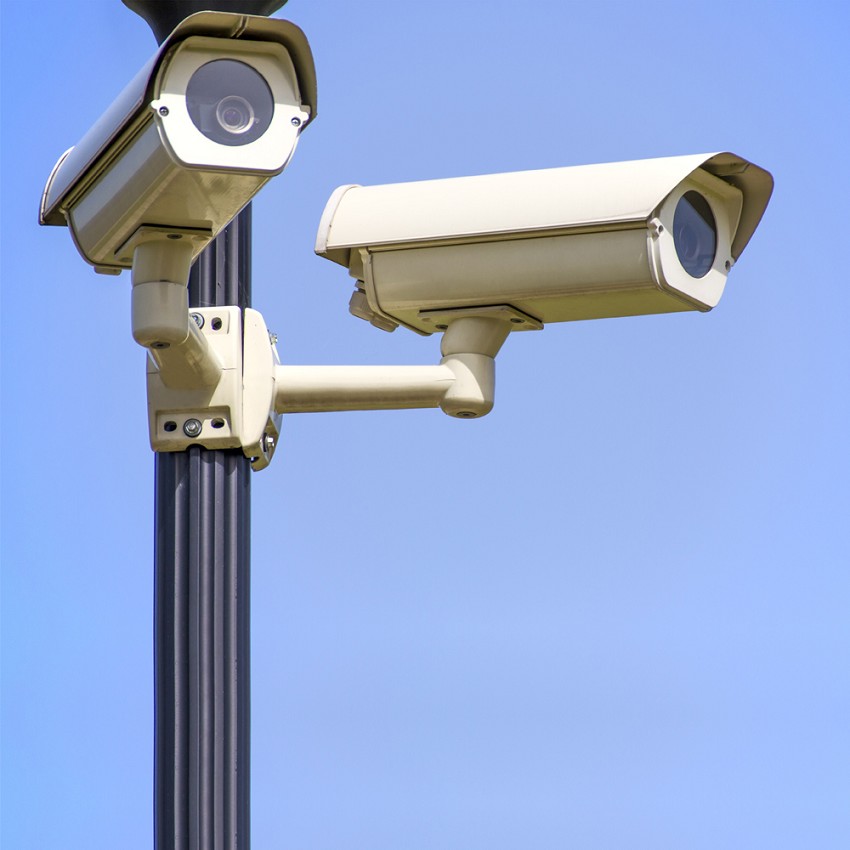
How a camera estate is actually built on fiber — spines, combination extenders that merge PoE cameras with SDI, and the points where copper legitimately ends.
CCTV is one of the manufacturer's three stated transmission pillars, and it is the application where fiber stops being a component choice and becomes the site architecture. A modern camera estate is a set of clusters — gate cameras, yard poles, building corners, car-park decks — tied back to a control room that may be hundreds of metres or several kilometres away. Copper serves inside each cluster. Fiber is the spine between clusters and the control room: immune to the lightning exposure of outdoor runs, indifferent to ground potential differences between buildings, and sized for decades of camera refreshes.
The catalogue's most telling CCTV product is a combination extender in the 3G-SDI family: eight Gigabit PoE channels plus six forward and two backward 3G-SDI channels on one fiber unit. It exists because real sites are mixed — IP cameras powered over Ethernet and SDI cameras (broadcast-style PTZs, legacy HD-SDI positions) sharing the same pole, the same cabinet and the same fiber. An architecture that forces those onto separate infrastructures is a drawing-board architecture; the combination unit is what the field actually installs.
| Model (official product name) | Series | Documentation |
|---|---|---|
| 1 Ch Bidirectional 3G-SDI Video Fiber Converter with Tally + RS485/RS422 + Stereo Audio + Microphone | — | Full specification confirmed per model at quotation |
| 1Ch 3G-SDI Fiber Extender with 4Ch HDMI Output | LNK-3G-1V4H | Specification captured from the official product page |
| 1U Rack-Mountable 8-Channel 3G-SDI Fiber Converter | — | Full specification confirmed per model at quotation |
| 3G-SDI Video Fiber Converter with Audio + RS422 + Ethernet + Tally + Sync | — | Full specification confirmed per model at quotation |
| 3G-SDI Video Fiber Converter with RS485 + RS232 + Stereo Audio Channel | — | Full specification confirmed per model at quotation |
| 3G/HD/SD-SDI Optical Micro-Extender with SMB Connector | — | Full specification confirmed per model at quotation |
Combination models referenced on this page, from the 3G-SDI family table: units that merge Gigabit PoE camera channels with forward and backward 3G-SDI on one fiber extender.
Group cameras by physical cluster (one cabinet or pole). Inside a cluster, copper and PoE do the work. Between cluster and control room, count fibers: video up, data/control back, spare strands for the refresh you cannot yet name. The converter and extender models are chosen after the cluster map exists.
Fiber carries no power. Each cluster needs its power design (local supply, PoE from a cabinet device, or extenders fed locally). The combination models assume cabinet power at the cluster; state the power reality per cluster in the design inquiry.
Estates with AHD/CVI/TVI cameras put those channels on their own converter pairs on parallel strands of the same spine cable — the architecture accommodates them without pretending they are IP traffic.
Spine length is set by the optical modules fitted to the chosen models against your fiber — the same discipline as every link on this site. Estate designs routinely run kilometres; the per-link figures are confirmed in writing at quotation.
A pole cluster is normally served by a small fiber count: the combination extender pattern merges the pole's PoE camera channels and SDI channels onto its link, and control/data returns on the same unit. The exact strand count is part of the design quotation.
Fiber is non-conductive, so a fiber spine does not carry surge energy between buildings the way a copper run does — one of the practical reasons outdoor estates standardise on it. Local power at each cluster still needs its own protection design.
Send the model name, the distance, the fiber type and the quantity. We will confirm the matching transmitter/receiver pairing, the optical module and the full specification of the exact model in writing before you pay.